
Insurance · 2024 · Client anonymised at their request
Cutting claims triage from six days to under one
Document-driven claims triage with a human decision point retained by design.
A regional insurance group
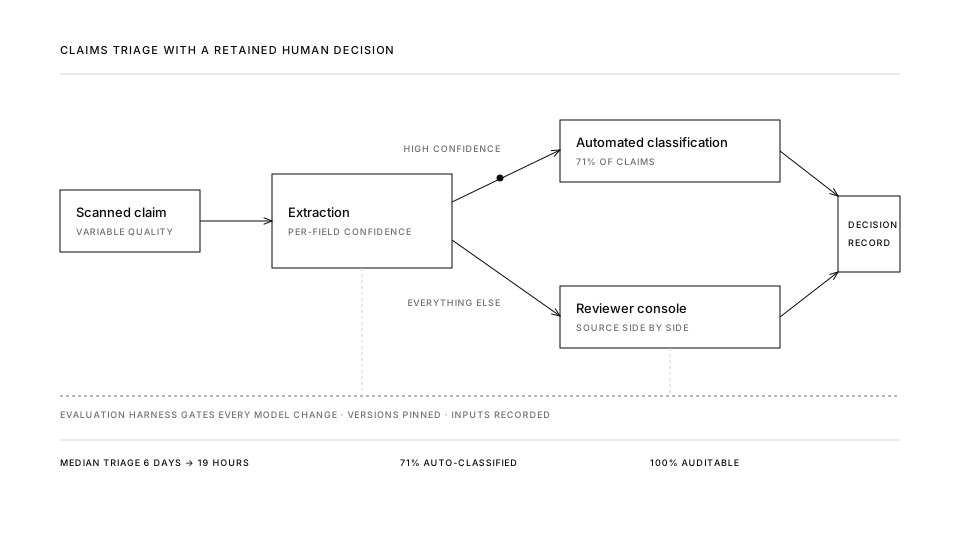
6d → 19h
Median triage time
71%
Claims auto-classified
100%
Decisions with an audit record
The constraint
Claims arrived as scanned documents of wildly varying quality, and the group could not accept a system that made final decisions without a reviewable human step. Explainability was a regulatory requirement, not a preference.
The architecture decision
Extraction ran through a document pipeline with confidence scoring per field, and only high-confidence extractions were routed to automated classification. Everything else escalated to a reviewer with the source document and extracted fields side by side. Every model version was pinned and every decision recorded with the inputs that produced it, so any outcome could be reconstructed months later.
What shipped
- 01
Document extraction pipeline with per-field confidence scoring
- 02
Evaluation harness gating every model change
- 03
Reviewer console with side-by-side source comparison
- 04
Immutable decision audit log
Adjusters stopped spending their mornings on data entry. The evaluation harness caught two regressions before they reached production, which is the part the group values most.
Figures verified with the client’s own instrumentation, not ours.
What it moved
Practices involved
- Data & AI systems
- Product engineering
- Design systems