
Logistics · 2025 · Client anonymised at their request
Turning nine disconnected depot systems into one operating picture
A consolidated visibility platform across nine countries and four legacy systems.
A pan-African logistics operator
9
Countries consolidated
4hrs → 3min
Shipment status latency
92%
Depot adoption in first quarter
The constraint
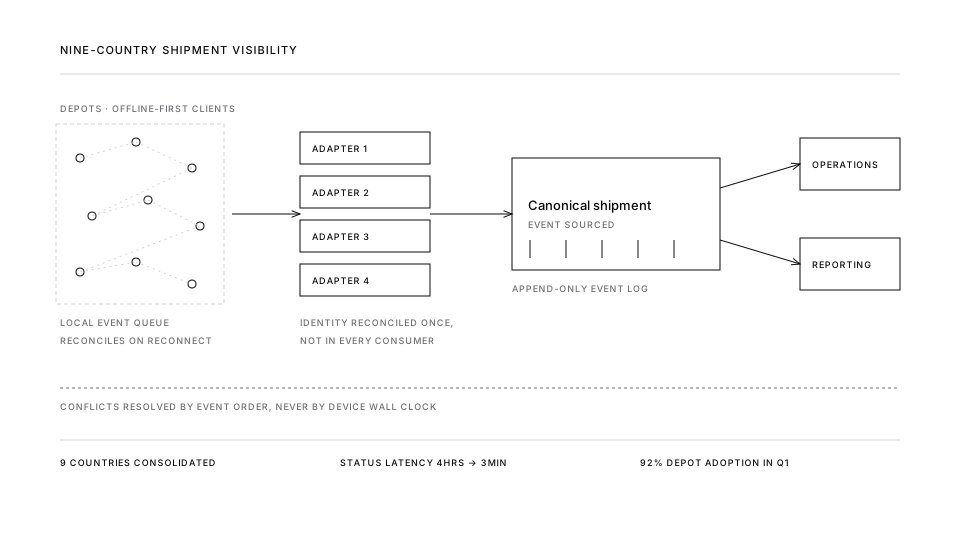
Each depot ran its own scheduling software, connectivity at several sites was intermittent, and no two systems agreed on what a shipment identifier meant. Any solution that required reliable network access at the edge would have failed.
The architecture decision
We put an event-sourced canonical shipment model at the centre and wrote thin adapters per legacy system, so identifier reconciliation happened once rather than in every consumer. Depot clients were offline-first, queueing events locally and reconciling on reconnect with deterministic conflict resolution based on event ordering rather than wall-clock time.
What shipped
- 01
Event-sourced canonical shipment service
- 02
Four legacy system adapters with identity reconciliation
- 03
Offline-first depot application on low-end Android
- 04
Operations dashboard with per-country drill-down
Head office moved from next-day spreadsheets to near-live visibility. Adoption at the depots came from the offline capability — it was the first tool that worked when the connection dropped.
Figures verified with the client’s own instrumentation, not ours.
What it moved
Practices involved
- Product engineering
- Mobile development
- Data & AI systems